Management & Policy
Sustainability Framework and Structure
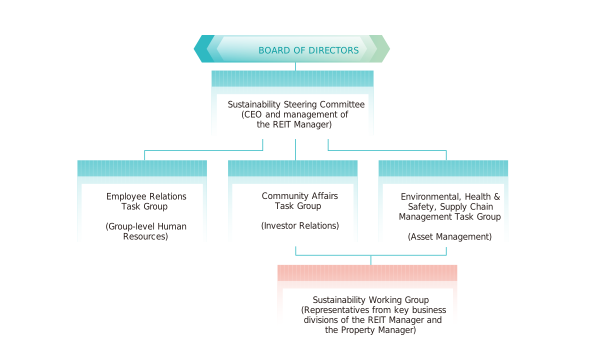
At Prosperity REIT, we believe that corporate responsibility is as equally important as maximizing financial returns for our shareholders. Therefore, we have established a three-layer sustainability governance structure to ensure effective sustainability governance and management of Prosperity REIT.
Risk Management
To reach our financial goals, we recognise the significance of mitigating business risks through robust risk management practices. Our Enterprise Risk Management (“ERM”) system is aligned with ESR’s ERM framework. This framework encompasses elements such as risk governance, risk infrastructure, and oversight of risk ownership, providing clear structures of responsibility and accountability to support risk management efforts.
Regular Risk Management Reporting and Controls at Prosperity REIT
The Audit Committee and the Board receive reports twice a year that present REIT-level risk profile. These reports provide insights on the risk assessment, explain the quantitative and qualitative factors that influence inherent risk levels, and examine the effectiveness of existing controls in mitigating residual risks.
Asset level risk assessment controls have been maintained and key ESG risks have been identified on a property level, with topics including but not limited to:
Supply Chain Management
We are dedicated to identifying and managing environmental and social risks in the supply chain. The ERM system incorporates these risks, which are identified through ongoing risk assessments. The Property Manager is tasked with updating the risk assessment controls for each asset within the REIT’s portfolio. Moreover, we present the REIT’s risk profile to both the Audit Committee and the Board at least twice a year. To effectively mitigate these risks within our supply chain, we carefully select and oversee suppliers based on stringent sustainability criteria.
Business Ethics